


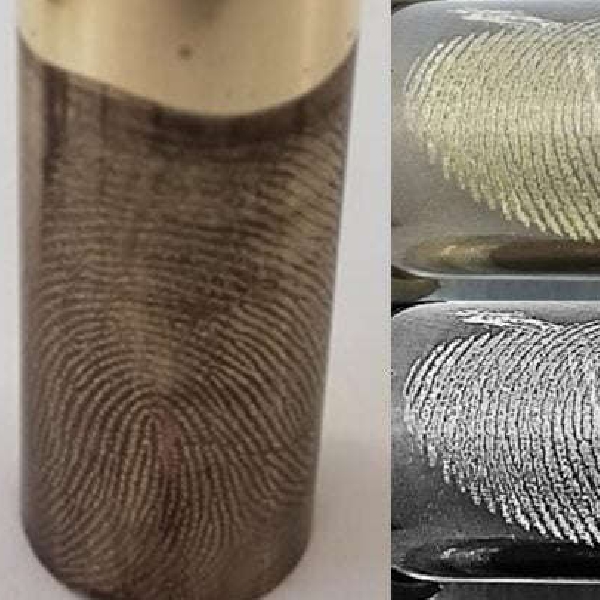
Criminals often left casings behind, confident they’d leave no evidence.
A major forensic breakthrough has been made at Maynooth University.
Scientists there have developed a new way to recover fingerprints from fired bullet casings - something once thought impossible.
Dr Eithne Dempsey and Dr Colm McKeever from the university’s Department of Chemistry have created a new electrochemical test.
It can reveal fingerprints on brass ammunition, even after a gun has been fired.
Until now, the heat and friction from gunfire destroyed all trace of fingerprints.
Criminals often left casings behind, confident they’d leave no evidence.
“The Holy Grail in forensic investigation has always been retrieving prints from fired ammunition casings,” said Dr Dempsey. “Traditionally, the intense heat of firing destroys any biological residue. However, our technique has been able to reveal fingerprint ridges that would otherwise remain imperceptible," Dr Demsey said.
Their process coats the casing with a special material using a tiny electric charge.
Within seconds, hidden fingerprints appear.
Tests show it works even on samples more than a year old.
Dr McKeever says it could link ammunition not just to a weapon, but to the person who handled it.
Researchers believe it could also be used on other metals, widening its use in crime investigations.
The team says the next step is full validation before the technology can be rolled out.
 Fuel Protests Force Major Road Closures Across Leinster
 Fuel Blockades Continue
 Friday's Kfm Obituary Announcements
 New Cultural Programme Set For Castletown House
 Celbridge Woman Who Lost Sister To CF Calls For People To Support Today's Fundraiser
 Protestors, Including Kildare's John Dallon, Refused Entry From Government And Agriculture Bodies Meeting
 Defence Forces Travelling To The Curragh Today For Training
 Newbridge Silverware’s Silver-plated Cutlery Factory Officially Closes